FAQs

What are the 7 Cs?

The 7 Cs are a comprehensive guide in the diamond industry, representing crucial factors that influence a diamond’s quality and value.

1. Carat Weight:
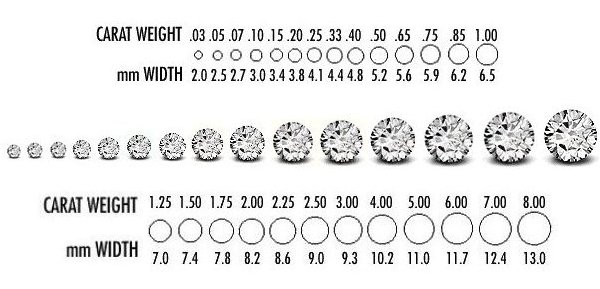
Carat weight is a measure of a diamond’s weight and size determining its brilliance and rarity.
2. Cut:
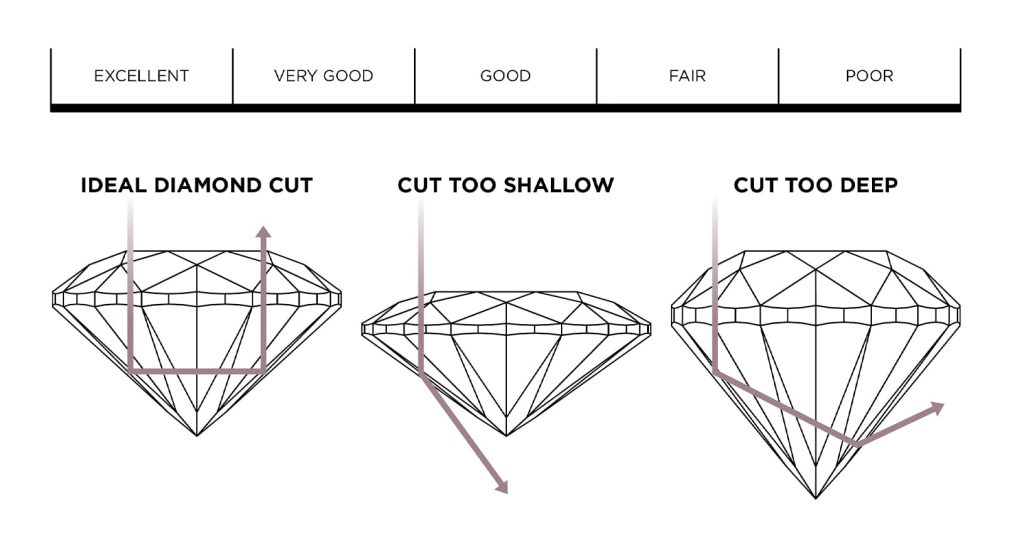
The cut of a diamond refers to how well a diamonds facets interact with light which determines its brilliance and sparkle. All Astrea’s lab diamonds are an ideal or excellent cut diamond which reflects nearly all the light that enters it and emits the most sparkle.
3. Colour:
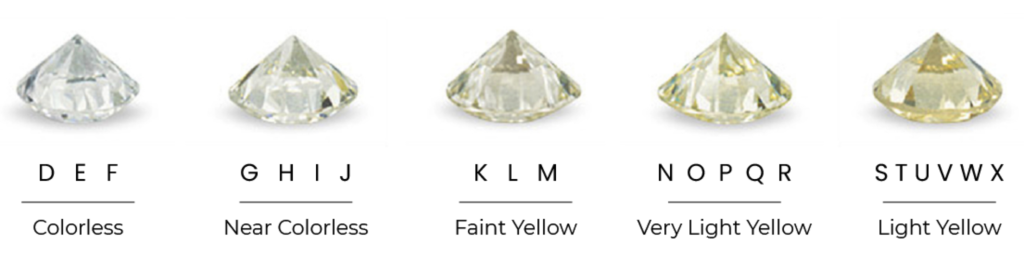
Diamonds come in various colours, and the absence of colour is highly valued. Graded on a scale from D (colourless) to Z (light yellow or brown).
“we look to inspire the entire diamond industry to evolve in a brave new direction”

4. Clarity:
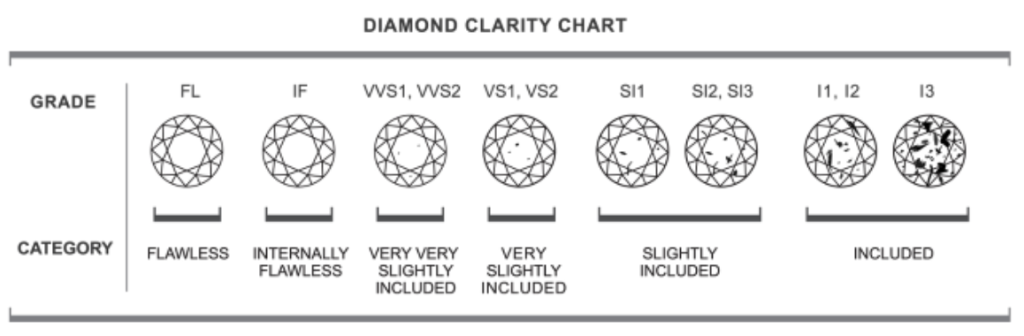
Clarity assesses the presence of natural imperfections or inclusions within a diamond. The fewer the imperfections, the higher the clarity grade.
5. Certification:
Certification ensures that your diamond meets industry standards and provides an unbiased evaluation. Astrea experts recommend that you only purchase diamonds that are certified by GIA or IGI, the two most reputable gemological grading institutions.

6. Cost:
Lab-grown diamonds are proving to be significantly more affordable than traditionally mined diamonds. However, it is also important to consider how each of a diamond’s graded characteristics contributes to the overall cost of the diamond.

7. Conscience (Ethical and Sustainable consideration):
Lab-grown diamonds are ethically sourced and conflict-free. Ensure your diamond has a clean, traceable origin, free from ties to violence, human rights abuses, or environmental harm.

Each of the 7 Cs plays a role in determining the perfect diamond for you. Whether you prioritise size, brilliance, or ethical considerations, understanding these factors empowers you to make an informed and meaningful choice.

What are the different shapes of Diamonds?

The Round Brilliant Shape Diamond is the most popular of all the diamond shapes. The Round Brilliant is cut with 58 facets allowing the light to be reflected throughout the stone. Due to the way it is cut, it sparkles more than any of the other diamonds. Inclusions are not as visible in the Round brilliant Shape like they are with some of the other stones.  The Round Brilliant Shape is the most popular of all the diamond shapes. Due to the way it is cut, it sparkles more than any of the other diamonds. Oval Shaped Diamonds are quite brilliant. However, like the Pear-Shaped Diamonds, caution is needed when purchasing to make sure that there are no “bow-ties” (grey triangular reflections) inside the stone. Small bow-ties are fine, but larger bow-ties will cause a large grey patch in the stone, detracting its sparkle. It is important to look at the length-to-width ratio of the oval shape, making sure that the stone is not too skinny and long or too short and wide. Radiant Shape Diamonds are either square or rectangular with slanted corners. Radiant Shape Diamonds have more durability against chips, which is great for those who are rough with their jewellery. The Radiant Shape Diamond has the second most brilliance after the Round Brilliant Shape Emerald Shape Diamonds do not have much brilliance, they hold their colour really well. They are quite “see-through” allowing one to look into the facets where stone inclusions may be visible to the naked eye. To make sure that the Emerald Shape looks nice, it is important to look at the length-to-width ratio, making sure that the stone is not too skinny and long or too short and wide Pear Shape Diamonds are quite brilliant. However, caution is needed when purchasing to make sure that there are no “bow-ties” (grey triangular reflections) inside the stone. Small bow-ties are fine, but larger bow-ties will cause a large grey patch in the stone, detracting its sparkle. It is important to look at the length-to-width ratio of the Pear Shape Diamond, as a stone that is too skinny and long or a stone that is too short and wide would not look so good
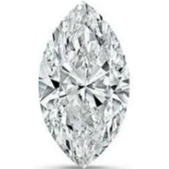
The Cushion Shape Diamond has become quite popular in recent years. Cushion Shape can be rectangular or square. Neither of those is better than the other, it is just personal preference. The Cushion Shape appears to be a mix of a square and round stone The Princess Shape Diamond is a square-cut diamond. Due to the corners being at 90 degrees, the corners must be protected by decent claws when set into a ring. Princess Shape Diamonds are well priced since they do not have much wastage when cut from a rough diamond Asscher Shape Diamond was created by Joseph Asscher in the early 1900s. The Asscher Shape Diamond has a similar appearance to an Emerald Cut Diamond with the main difference being that it is square with slanted corners. The Marquise Shape Diamond is a popular diamond shape characterised by its elongated, boat-shaped outline with pointed ends. The marquise cut is known for its elegant and distinctive appearance, and it can make a diamond appear larger than other cuts of the same carat weight due to its elongated shape. The Heart Shape Diamond is a romantic and distinctive diamond shape that is characterised by its resemblance to a heart, making it a symbol of love and affection. It’s a unique and eye-catching choice for engagement rings and other jewellery

Are Lab-grown diamonds real diamonds?

Accepting lab/ nurtured diamonds as real diamonds was officially done by the regulators:

 In 2018, the Federal trade Commission (FTC) rules that lab grown diamonds were in fact diamonds! “They were no longer viewed as synthetic and could be marketed as diamonds.” Forbes Oct 2023.

I have been a Gemologist in the diamond industry for over 18 years and have followed the evolution of the lab diamonds.  When I was introduced to lab diamonds, I was taken aback by their quality, colour, brilliance, sparkle and their fire.  With a Gemologist’s perspective, I can state that lab diamonds are absolutely superior in quality to their mined counterparts. We are producing only type 2a, which compares with only 1-2% of mined diamonds. Our diamonds have a greater hardness, structure and purity, better clarity and fire. Everyone can now wear a lab diamond with exceptional high qualities that is very rare (if not impossible) to find in the mined industry.  Real Diamonds are today made by Real Science” Arnaud Flambeau – Gemologist for over 18 years & board member of the Dubai Diamond Exchange – DMCC . Also chairman and founder of “2 DOT 4” , the first prime diamond grower in the Gulf Cooperation Council (GCC), the United Arab Emirates (UAE) and Dubai.

What are the different terminologies for lab diamonds?

There is currently a lot of misleading language used to describe lab diamonds.  Most of this confusion stems from the mined diamond industry to scare consumers away from lab diamonds.  Having done lots of research, Astrea wants to highlight the facts about lab diamonds in order to help educate the public and businesses within the luxury market about the reality of the lab diamond industry.

Lab diamonds – also known as 

  • Grown diamonds
  • Man-made diamonds
  • Cultured diamonds
  • Created diamonds
  • Manufactured diamonds

Today we have the following “Diamonds” on the market:

  • Mined diamonds (also called Natural diamonds) that come from the earth and take 1-3 billion years to come to the surface through tectonic movement and eruptions. IGI and GIA (the two main trusted worldwide diamond grading institutions) provide certification on mined diamonds.
  • Lab diamonds or as Astrea calls them “Nurtured diamonds that are created by natural processs and perfected by science” (takes 2/4 weeks to produce). IGI and GIA also certify Lab / nurtured diamonds in exactly the same way as they do with mined diamonds.
  • Diamond Simulants –  (also known as synthetic diamonds) which are designed to look like diamonds for a fraction of the cost of a lab or mined diamond but without the same qualities – include Cubic zirconia and Moissanite.  They are not carbon based and they do not have the same physical or chemical properties.  Other gems including white sapphire, white zircon or even clear quartz have been associated with simulating diamonds.  Diamond simulants do not receive certification from IGI or GIA and can be detected by the naked eye.
  • Natural modified diamonds – These are poor quality mined diamonds which are colour treated and/or post treated with HPHT.   They are cheaper than mined diamonds but more expensive than lab diamonds.

The Mined diamond industry has a strong and universal opinion about the name they would like lab diamonds to be known by.

De Beers and other large mined-diamond companies lobbied to keep “synthetic diamonds” as the standard term used to refer to lab diamonds but in 2018 the FTC (Federal Trade Commission) made headlines around the world when they announced that lab diamonds were diamonds in every sense, and the word ‘synthetic’ was incorrect.

Is there a difference in quality or certification between a Lab/nurtured diamond and a mined diamond?

The truth is that Mined and Lab/ nurtured diamonds both have the same chemical composition (see below), crystal structure, physical and structural MM properties as well as being visually identical (the same fire, scintillation, and sparkle)! No diamond experts / gemmologists or testers can differentiate them with the naked eye or even with a loupe. It is now finally accepted and globally recognised that mined and Lab / nurtured diamonds get the same certification by IGI or GIA based on the same criteria.   

  • Chemical Composition: C
  • Crystalline Structure: Cubic
  • Refractive Index: 2.42
  • Dispersion: 0.044
  • Hardness (MOHS): 10
  • Density: 3.52

How are lab diamonds made?

Unlike the time it takes to unearth mined diamonds, lab / nurtured grown diamonds typically take less than a month to grow in a controlled laboratory environment through state of art technology simulating the Earth’s natural processes. Scientists replicate the mined diamond formation process and the natural conditions using renewable energy. These high-tech manufacturers expose a tiny shard of a diamond, called a “diamond seed” similar to a mined diamond.  The cut and polishing of both mined and lab diamonds is done with exactly the same process ad expert craftsmanship.

 There are two main procedures commonly used to create lab grown diamonds:

​High Pressure High Temperature (HPHT)

Due to the extreme temperature and pressures involved, this process could be likened to natural diamond formation

 Chemical Vapor Disposition (CVD)

The CVD method relies on carbon-based gases with high temperature and low pressure. This technology mimics how the universes uses plasma to create stars and planets. 

How do I choose between HPHT and CVD Lab Diamonds?

At Astrea, we do not believe that one method is better than the other, nor that there is a difference.  What matters is the final product and the true quality of the stone which is determined by our Gemologists assessment and the IGI/GIA certification.

  • Both CVD and HPHT technologies can create diamonds of any colour, clarity, and size.
  • All our supply is Type II, the most chemically pure diamonds available.
  • Both methods can produce D colours, VVSL1, and FL diamonds.
  • HPHT generally yields higher colour, while CVD tends to produce higher clarities.
  • Most diamonds under 1ct are usually HPHT for cost-effectiveness.
  • Between 1 – 2.5/3 carats, the market supplies both CVD and HPHT equally.
  • For diamonds above 2.5/3 carats, CVD is more common, resulting in larger stones.

Even diamonds with the same certified characteristics can differ in appearance and therefore it is key for a gemologist to our physically assess each diamond to ensure you get the best quality.

What are the different diamond types?

Diamonds can be of differing Diamond types based on chemical impurities.  This significantly impacts their purity and other characteristics.

Type II (a and b) diamonds are the purest, with negligible impurities. Type IIb diamonds contain Boron elements and emit a blue or grey tone, associated with fancy blue diamonds. All lab diamonds are Type II, with CVD diamonds produced as Type IIa.

98-99% of the world’s mined diamonds are Type 1 and have more impurities, lower hardness, and carbon purity compared to Type II.

Astrea exclusively selects Type II lab diamonds, aligning with the top 1-2% of natural diamonds in the market.

Why do some lab diamonds undergo post-treatment?

Up to 90% of CVD diamonds undergo post-treatment (which is simply further high-pressure treatment) to enhance clarity and colour grades, ensuring a higher-quality stone.

No chemicals are involved in post-growth treatment.

Changes from post-growth treatment are permanent, assuring your diamond’s colour won’t change or fade over time.

Whilst there is a small percentage (2%) of “as-grown” CVD diamonds without impurities, they are rare and come with a premium price.

Very few HPHT diamonds need post-treatment, but gemologists must assess impurities to ensure the best quality stone.

Astrea does not prefer one method vs the other and only chooses the finest stones with our Gemologists guidance regardless of what process or treatment they originated from.

Certification of Lab diamonds

Astrea London recommend that all diamonds purchased, whether lab or mined, should be certified by one of the two most trusted diamond certifiers, namely GIA (Gemological Institute of America) and IGI (International Gemological Institute). Astrea London will ensure all our diamonds above 0.5 carats will be certified by one of these two companies.

Certificates from other institutions can be questionable particularly as grading styles can differ between companies resulting in quality variations. Experts grading the colour and clarity of the diamonds have always trusted GIA and IGI for their grading as both companies have maintained their grading standards and have the best technology. As a result, their reputation remains strong in the market.

When lab diamonds are produced (anywhere in the world) circa 80-90% goes through Surat (India) to be cut and polished by Gems experts and receive a certification. All our certified lab-grown diamonds are laser inscribed, giving you peace of mind that your diamond will have an easily identifiable unique number.

IGI have been certifying lab diamonds since 2015, using the same standards as mined diamonds. GIA, despite grading lab diamonds since 2007, only began recognising lab diamonds as ‘non synthetic’ in 2021 when they started certifying them with the same standards as mined diamonds. As a result, IGI certify approximately 90% of lab diamonds today.  Further to this, jewellery can also be certified separately, once the diamonds are set within the pieces, by an independent company (like the World Gemological Institute – WGI).

IGI certificates state whether a lab diamond is grown with either the CVD or the HPHT process. They also mention whether the diamond is type IIa (for CVD) or type 2 (for HPHT).

Why could there be variations in lab diamond quality?

  1. Different machines produce different diamond qualities.
  2. Investment in Technology: Regular updates to reactors and materials are essential to maintain high-quality diamond production.
  3. Seed Quality Matters: The initial seed quality significantly defines the overall diamond quality.
  4. A diamond is as good as the cut and polish it is given.  Differences in the cut and polish can affect the quality of the diamond and therefore the price.

At Astrea, we address these differences by sourcing diamonds exclusively from the finest manufacturers with rigorous processes. All our diamonds undergo further assessment by our expert gemologists.

Are Lab-grown diamonds sustainable and environmentally friendly?

Diamond mines often require clearing large areas of land, involving significant deforestation, pollution of local water supplies and destruction of local eco-systems. The network of diamond mines and the pollution created as a result is environmentally harmful and contributes little to local economies. Diamond mines could otherwise be exploited as valuable land resources which could be used for more sustainable purposes, such as farming.

Lab diamonds, created in a controlled and tightly regulated environment, have a far less harmful impact to the environment than mined diamonds. They do not cause ecological disruption to any land surfaces, no long-term effect on pollution, wildlife or social effects. Lab stones are partly created with renewable energy, leaving behind minimal emissions therefore causing little to no harm to our planet and society. Lab diamonds also do not require water unlike mined diamonds.

Frost & Sullivan conducted a benchmark study comparing the environmental impact of mined and lab diamonds. Assessing impacts on a common scale, their ratio indicator revealed a staggering difference. To provide a comprehensive overview, they allocated weights using the Analytic Hierarchy Process (AHP) framework, emphasising the substantial environmental advantage of lab diamonds.

For instance, air emissions for 1 carat of mined diamond were 1.5 billion times higher than for a lab diamond.  The study also showed, on an indicative basis, that mined diamonds represented more than 7 times the level of impact compared to mined diamonds.

Are Lab-grown diamonds ethical?

Lab diamond production does not involve human rights violations, such as forced or unsafe labour or even child labour, that is often associated with mining diamonds. As a result, by purchasing a lab diamond, you will never have to worry about purchasing an unethical stone or even a “blood diamond”.  Blood diamonds, often known as “Conflict diamonds”, are gemstones mined in territories controlled by rebel forces opposed to internationally recognised governments. The rebels sell these diamonds and use the proceeds to buy weapons or support military operations. By contrast, lab diamonds are ethically sourced.

Do Lab Diamonds hold their value?

One of the biggest misconceptions created by the mined diamond industry about lab-grown diamonds is that they do not hold their value and hold little or no value on the resale market. As a percentage of their original purchase price, lab grown diamonds hold roughly the same resale value as natural diamonds.

Are lab diamonds a good investment?

A lab diamond is eternal and can be enjoyed forever. Strictly, for financial investment purposes, lab-grown diamonds, like mined diamonds, will fluctuate daily like any commodity. However, lab-grown diamonds are proving harder, whiter and of better quality than their mined counterparts and as a result, their industry is growing at exceptional pace.

Arnaud Flambeau (Chairman) and his team at 2DOT4 (the only Lab diamond manufacturer in the UAE) , forecast a stabilisation in prices of Lab-grown diamonds, followed by an increase in the years to come due to the following factors:


1. The Lab diamond market just reached 50% in the US and is now the rest of the world is beginning to catch up.

2. The demand for lab diamonds will increase in market share worldwide with a 9.8% CAGR (Bain & Co) until 2030.

3. The ability to produce bigger diamonds will boost average Price per Carat.

4. Continuous research into developing the science and improving the machinery behind the production of lab diamonds will increase the quality of diamonds produced.

5. There will be a large shift in theproduction capacities of lab grown diamonds from Gems to Industrial segments (for example: Electronics, Optics and Medical) where manufacturers receive higher margins.

6. Barriers to entry are high due to machine production costs and access to the technology.

7. Consolidation of the market especially in India

Where are these lab diamonds produced and distributed?

Most laboratory-grown diamonds are produced in China (56%), India (15%), Singapore, USA and Canada and the UAE. There is a lot of investment in new production capacity in Asia today and the share of Asian producers is likely to increase further.

What should I consider when buying a lab diamond?

When purchasing a lab diamond, it’s crucial to:

Beware of Simulants: Some companies may use terms like simulants for diamonds made from materials like cubic zirconia or moissanite. These are easily distinguishable with the naked eye, unlike lab or mined diamonds.

Check for Gemologist Inspection: Ensure that online companies have gemmologists physically checking lab diamonds before selling them.

Verify Certificates: Stick to reputable institutions like IGI and GIA for certification. Be cautious of certificates from other sources.

Understand Inclusions: Recognise that most diamonds, whether lab or mined, may have inclusions. Mined diamonds often have noticeable impurities and minerals, HPHT lab diamonds may have metallic flux inclusions, and CVD lab diamonds may have polycrystalline inclusions. However, it’s essential to note that inclusions in lab diamonds are generally less visible to the naked eye compared to mined diamonds.

Is my shipment insured?

Yes, your jewellery is fully insured by Astrea whilst in transit to the point when you receive it.

Can I insure my lab grown diamond ring and jewellery?

Yes, it works the same way as with any diamonds or jewellery you have.

What is your warranty?

All our diamonds come with a lifetime warranty. We strongly believe that our strict process ensures that we only select the best diamonds on the market and provide high-end quality jewellery. However, if you make a claim under this warranty, the original certificate must be returned, together with the jewellery for a full assessment.

How long does it take to receive my jewellery?

For some of our ready made jewellery, we need 1-2 weeks. However, please allow 4 to 6 weeks for our bespoke, made to order jewellery, some jewellery will be quicker, some might take a bit longer.

What is the process for purchasing bespoke jewellery with Astrea?

The first stage is to discuss your intended design with us so that we can estimate the cost and send you an invoice.  Upon receipt of the invoice, we ask for a 50% deposit to complete the designs for your piece of jewellery and source the best diamonds and begin production.

Within 2-4 weeks, we’ll send you a video of your completed piece (checked by our gemologist experts who will send you a video for final approval).  We deliver worldwide with full insurance. You can settle the final 50% when you collect directly from us or before it’s shipped. We accept payment by bank transfer or any payment card, including AMEX.

Why lab diamonds are a better quality Gem than a mined diamond?

Mined gemstones develop inclusions from the crystallisation process that involves gases and other minerals mixing in the molten stage of the stone creation, which adversely affects the value of the gem.

Because lab-created gemstones do not have gases added in the same way that nature does, inclusions do not have a chance to form in the stones. This makes the quality of the gem higher.

Browse by collection

Our signature collections showcase our spellbinding diamonds – with striking, highly sought after designs that will always hold timeless beauty.